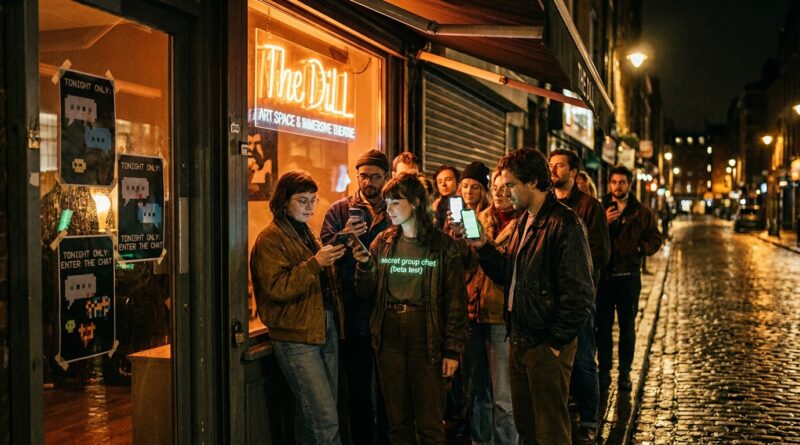
Tonight’s Secret Immersive-Theatre Beta: How One ‘Secret Group Chat’ Ticket Can Turn You Into A Live-Performance Test Insider
It is annoying to discover the cool stuff after everyone else. One friend posts a blurry photo from an invite-only performance, another says, “Oh, it was just a beta run,” and suddenly you feel like there is a whole hidden calendar you never got. The good news is that this world is usually less closed than it looks. For immersive theatre beta test secret group chat performance listings, the trick is not having special status. It is learning the language organizers use when they quietly need an audience fast. Right now, that matters because small experimental shows, including time-sensitive events like Roxana Barba’s “secret group chat (beta test)” on May 21, 2026, often need curious people who will show up, pay attention and give useful feedback. If you know what terms to look for, and you keep a simple tracker, one lucky ticket can become your entry point into a repeatable preview habit.
⚡ In a Hurry? Key Takeaways
- “Beta test,” “invited dress rehearsal,” and “preview performance” often mean early-access tickets are available before wider public buzz starts.
- Save these listings in a basic notes app or spreadsheet with date, venue, contact link, and sign-up status so you can respond quickly.
- Stick with legit venues, read the attendance rules, and be the person who arrives on time and gives helpful feedback. That is how repeat invites happen.
Why these events feel hidden even when they are not
Most people imagine a velvet-rope system. In reality, a lot of small performance makers are just busy, under-promoted, and trying to fill a room with the right kind of audience.
That audience is not always “industry.” Often it means people who are reliable, open-minded, and okay with a show still being tested.
That is why phrases matter. “Beta test” tells you the creators are trying mechanics, timing, audience flow, or interaction. “Invited dress rehearsal” usually means the work is close, but not locked. “Preview performance” often means tickets may be public, but the experience is still being adjusted.
If you start reading listings with that in mind, the gate suddenly looks a lot less solid.
What “secret group chat (beta test)” really signals
For an event like Roxana Barba’s “secret group chat (beta test),” the title itself is doing two jobs at once. It sounds exclusive, which creates intrigue. But the words “beta test” also signal a practical need. The artists want people in the room.
Not just bodies in seats. Useful bodies in seats.
That means people who can handle an experiment, follow instructions, and possibly share feedback after the show. If that is you, you are exactly the kind of attendee many organizers want.
What organizers are often testing
At immersive and hybrid performances, a beta run may be used to test:
- How check-in and arrival timing work
- Whether audience instructions make sense
- How many people fit comfortably in the space
- Whether interactive moments feel natural or confusing
- How long the full experience actually takes
- What kind of feedback the audience gives afterward
When you understand that, the ask becomes clearer. They are not asking for fame. They are asking for dependability.
The phrases that should make you stop scrolling
If you want to get better at spotting early-access opportunities, train your eye for a short list of terms. These are the phrases that often matter more than a flashy poster.
Priority terms to watch for
- Beta test. Usually means experimental access and a chance to see the work before formal launch.
- Invited dress rehearsal. Often a semi-private run used to test the near-final version.
- Preview performance. A public-facing term that can still mean early, adjustable, and less crowded.
- Feedback session. A strong clue that the team wants engaged attendees, not just passive viewers.
- Work-in-progress showing. Rougher than a preview, but often easier to access.
- Closed rehearsal with audience. Sounds exclusive, but may simply require RSVP approval.
- Soft opening. Common in hospitality, but also used by venues and event producers testing operations.
These terms show up in venue newsletters, Instagram captions, artist posts, event platforms, and tiny ticket links buried in bio pages.
How to actually find immersive theatre beta test secret group chat performance listings
You do not need a special app. You need a repeatable search habit.
Start with the small places, not the big ticket sites
Large event sites are often too late. By the time something appears there, the insider crowd may already know.
Instead, check:
- Small black box and experimental theatre websites
- Artist Instagram accounts and stories
- Venue newsletters
- Local arts calendars
- Community event pages
- University performance departments
- Film-adjacent and art-tech collectives
If you are in Los Angeles, this pairs nicely with Tonight’s Immersive Theatre Beta Hack: How To Turn LA’s Secret Dress Rehearsals Into Your Own Preview Night Calendar, which shows how these “sudden” immersive nights usually leave a trail if you know where to look.
Use search terms like a human, not a robot
Try combinations such as:
- immersive theatre beta test
- secret group chat performance preview
- invited dress rehearsal theatre [your city]
- preview performance immersive [your city]
- work in progress audience call performance
Then check the date. Check the venue. Check whether RSVP is required. Move quickly if it is within the next week.
Your simple tracker: the easiest way to stop missing these
This is the part most people skip. It is also the part that turns random luck into a system.
Open whatever you already use. Notes app. Google Sheet. Apple Reminders. Anything is fine.
What to track
- Event name
- Date and time
- Venue or organizer
- Terms used, like beta test or preview
- Link to RSVP or ticket page
- Contact email or Instagram
- Status, such as applied, confirmed, waitlist, attended
- Notes, like “feedback requested” or “must arrive 15 minutes early”
That is enough.
Why does this help? Because the same venues, producers, and artists often do this more than once. Once you start seeing names repeat, you stop treating each event like a one-off mystery.
How to increase your odds of getting invited again
This is the low-tech part people overlook. Show up like a person they would want to have back.
Be easy to work with
- RSVP only if you can actually attend
- Arrive on time, or early if requested
- Read the instructions before you go
- Follow phone, photo, and interaction rules
- If feedback is requested, keep it specific and useful
That last one matters. “Loved it” is nice, but “The check-in was confusing and I did not know where Scene Two began” is gold to a creator.
What good feedback looks like
Try a simple format:
- What worked
- What was confusing
- Where pacing slowed down
- Any technical or access issues you noticed
You do not need to sound like a critic. You just need to be observant.
How to tell the difference between “exclusive” and “too vague to trust”
Not every cryptic listing is charming. Some are just poorly explained. A few may be risky.
Green flags
- A real venue, organizer, or artist identity is listed
- There is a clear RSVP or ticket process
- Timing and location details are specific enough to verify
- The event description explains audience expectations
- There is contact information for questions
Yellow flags
- No venue details until payment, with no organizer history
- Pressure to pay through unusual channels
- No refund or attendance information at all
- Instructions that seem unsafe or intentionally confusing
Mystery can be part of immersive theatre. Basic transparency still matters.
Why one ticket can turn into a steady stream of preview access
This is the real upside. Once you attend one immersive theatre beta test secret group chat performance and handle it well, you start to understand the ecosystem.
You recognize the names. You notice which venues host experimental runs. You follow the right accounts. You learn how far in advance these things appear. And your tracker starts becoming a private map.
That is how casual attendees turn into the people who somehow always know what is happening first.
At a Glance: Comparison
| Feature/Aspect | Details | Verdict |
|---|---|---|
| Beta test listing | Usually early access, smaller crowd, and a chance the creators want comments afterward. | Best option if you want to get in early and build relationships. |
| Invited dress rehearsal | Closer to final form, sometimes semi-private, often offered through niche lists or direct RSVP. | Great sweet spot between access and polish. |
| Preview performance | More public than a beta, but still early enough that changes may be happening. | Easiest entry point for beginners. |
Conclusion
You do not need secret industry credentials to get into this world. You need better pattern recognition. Right now, there is a real, time-sensitive window around events like Roxana Barba’s “secret group chat (beta test)” performance on May 21, 2026, where organizers quietly recruit curious, reliable audiences for invited dress rehearsals and feedback runs. If you start watching for phrases like “beta test,” “invited dress rehearsal,” and “preview performance,” then drop them into a simple personal tracker, you can turn one local immersive-theatre experiment into an ongoing stream of early invites across performance, film-adjacent events, and hybrid art-tech projects. That is the practical win here. You stop waiting for the mass-market premiere and start seeing the interesting stuff while it is still taking shape.