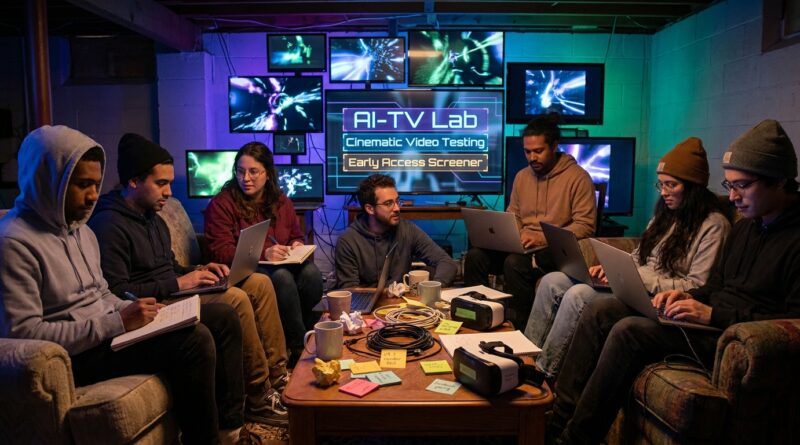
Tonight’s AI TV Intern Shortcut: How To Turn One Cinematic Video Testing Gig Into Your Own Ongoing Screeners Feed
You know the feeling. You finally spot an exciting AI TV cinematic video testing internship early access post, click through, and it is already crowded with filmmakers, prompt artists, Discord regulars, and people who somehow heard about it three days ago. Meanwhile, the rest of us are stuck seeing the opportunity only after it has escaped the private group chats and landed on a big job board. That is the annoying part of this new AI-film world. The best chances rarely begin as polished listings. They start as scrappy Instagram stories, Reddit casting-style posts, Discord invites, or “looking for beta viewers” notes buried in creator comments. The good news is you do not need insider status to catch them earlier. You need a repeatable search pattern. Once you learn how to trace one post back to the studio, tool, creator circle, and feedback loop behind it, one internship lead can turn into a steady personal feed of screeners, rough cuts, and test invites.
⚡ In a Hurry? Key Takeaways
- Most AI-video testing roles appear first in creator communities, not on major job boards.
- Turn one public internship post into an ongoing discovery system by tracking the people, tools, hashtags, and communities connected to it.
- Be careful with unpaid “opportunities.” Ask what access you get, what feedback is expected, and whether your work can be used in promotion.
Why these roles are so easy to miss
AI-native film and TV is moving fast, and it still behaves more like an indie lab scene than Hollywood. A team might be testing short-form episodes, interactive pilots, synthetic actors, voice-driven edits, or alternate endings. They do not always need a formal employee. Sometimes they just need twenty smart viewers who can say, “Scene two drags,” or “the face animation breaks at 0:42.”
That means the callouts are often casual. “Need testers.” “Looking for intern editor-reviewers.” “Seeking early critics.” “DM for screener access.” If you are only checking LinkedIn or Indeed, you are arriving late.
The trick is to stop searching for finished job listings and start searching for early signals.
Start with one post, then work backward
Let’s say you find an Instagram post for a cinematic video testing internship. Do not just apply and move on. Treat it like a trailhead.
What to check first
Open the creator or studio profile and look for four things.
- Who they follow and who follows them back
- What tools they mention, such as Runway, Pika, Luma, Sora-style workflows, ComfyUI, or custom pipelines
- Whether they have a Discord, Substack, Patreon, Telegram, or private community link
- Which collaborators are tagged in comments, trailers, and behind-the-scenes clips
This matters because AI-video projects tend to move in clusters. One tiny studio, one prompt designer, one community manager, and one editor may all be involved in several experiments at once. Follow the cluster, not just the ad.
The reverse-engineering method that actually works
1. Save the exact language of the post
Copy the terms they use. Not your version. Their version.
Examples:
- “AI cinema intern”
- “beta viewer for episodic AI series”
- “pre-release feedback crew”
- “synthetic film fellowship”
- “test audience for generative video pilot”
People in new fields often reuse the same phrases across platforms. Search those exact words on Reddit, X, Instagram, TikTok, YouTube, and even Google with quotation marks.
2. Search the names around the project
Do not stop at the studio name. Search:
- the director
- the editor
- the motion designer
- the voice artist
- the tool partner
- the community manager
In this scene, the community manager is often the real early-warning system. They post the “testing crew needed” update long before the company site says anything.
3. Follow the tool trail
If a creator says their pilot was built with a certain AI-video tool, go look at that tool’s community pages, showcase feeds, and challenge winners. Tool companies love highlighting creators, and highlighted creators often need fresh testers for the next thing.
This is where AI TV cinematic video testing internship early access often begins. Not in a jobs tab. In a showcase, challenge, creator spotlight, or beta-user community.
4. Read the comments like a detective
The comments are where people say the quiet part out loud.
Look for lines like:
- “We need more eyes on episode 2.”
- “Join the Discord for early drops.”
- “Applications closed here, but we may open a reviewer round.”
- “Check our bio for the private screening form.”
That is often your real opening.
Where to look before the crowd arrives
Still one of the best places for early creative calls. Check Stories, not just grid posts. A lot of these opportunities vanish in 24 hours.
Search combinations like:
- #aicinema
- #aifilm
- #generativevideo
- #virtualproduction
- #screenertest
- #betaviewerswanted
Reddit is useful because people ask practical questions there before projects go public. Search for terms like “feedback on AI short film,” “looking for test viewers,” and “intern for AI video series.” Small creator subreddits and filmmaking communities can surface leads early.
Discord
This is where a lot of the real action lives. If a creator has a Discord, join it. Quietly at first. Read the announcement channels. Many teams recruit from the people already paying attention.
X and LinkedIn
X is good for fast chatter. LinkedIn is where the same role may appear later and more formally. Use X for discovery and LinkedIn for verification.
Substack and newsletters
Some AI filmmakers are better at writing than posting. Their newsletter may mention “private cuts,” “feedback cohorts,” or “community screeners” before any social post does.
How to turn one lead into your own screeners feed
Here is the part most people skip. They apply once and hope. Instead, build a tiny system.
Create a simple tracker
Use a notes app or spreadsheet with these columns:
- Project name
- Creator or studio
- Platform where you found it
- Keywords used
- Community links
- Application status
- Next follow-up date
After a week or two, patterns start to show. The same creators keep crossing paths. The same Discords keep being mentioned. The same hashtags keep surfacing promising experiments.
Build three saved searches
Keep them narrow and human-sounding.
- “AI film beta viewers” OR “AI series testers”
- “generative video intern” OR “cinematic video testing internship”
- “rough cut feedback” AND “AI”
Run those searches every few days. You are not hunting for volume. You are hunting for signals.
Make a short, useful intro message
When you do reach out, skip the big speech. Be specific.
Try something like this:
“Hi, I saw your call for early viewers on the pilot. I like testing story flow, pacing, and where AI visuals break immersion for normal viewers. If you are still adding people, I would love to help. I can send concise feedback and respect NDAs.”
That sounds far better than “Any openings?”
What teams actually want from testers and interns
They usually do not need you to sound like a film professor. They need you to notice what works and what feels off.
Your value is often basic but rare
- Can you explain where attention drops?
- Can you spot confusing edits?
- Can you tell when an AI visual effect becomes distracting?
- Can you compare a rough cut to what normal viewers would tolerate?
This is good news for the Previewers Network crowd. You do not have to be a VFX engineer. You just have to be observant, reliable, and early.
How to avoid the sketchy offers
Not every “internship” is worth your time. Some are just free labor with fancy wording.
Ask these questions before you say yes
- Is this paid, stipend-based, credit-based, or volunteer?
- What exactly am I testing or reviewing?
- How much time is expected each week?
- Will I get screeners, private access, or direct feedback sessions?
- Will my comments be credited, quoted, or used publicly?
- Is there an NDA?
If they cannot answer basic questions, be careful. Early access is fun, but your time still counts.
The best part is not the title, it is the access
The phrase “AI TV cinematic video testing internship early access” sounds like a job-hunting term, but the real reward is broader than that. Once you get inside one project, you start seeing neighboring ones. Someone invites you to a private screening. Another creator asks if you can review an alternate cut. A tool beta opens up. Suddenly you are not waiting for mainstream coverage anymore.
You are watching the rough draft of a medium while it is still weird.
At a Glance: Comparison
| Feature/Aspect | Details | Verdict |
|---|---|---|
| Where roles appear first | Instagram Stories, Discords, Reddit threads, creator comments, tool communities | Best place to catch openings before they go mainstream |
| Best discovery method | Reverse-engineer one post by tracking keywords, collaborators, tools, and community links | Most reliable way to build a repeatable feed of leads |
| Main risk | Unclear unpaid work, vague promises, no real access, or misuse of your feedback | Ask clear questions before committing your time |
Conclusion
If you have been frustrated by always hearing about AI-film opportunities too late, you are not imagining it. The good stuff really does appear in odd corners first. But that also means regular readers can beat the crowd if they stop relying on polished listings and start following the breadcrumbs. This helps the Previewers Network community right now because AI-native film and TV is where the strangest and most experimental work is happening before it reaches Netflix or theatres, and those teams are actively looking for testers and early critics. Learn to reverse-engineer one Instagram or Reddit call into a repeatable search pattern, and you move from passive observer to early witness. Instead of just reading takes about how AI cinema is coming, you get hands-on access to rough cuts, failed experiments, and next-gen formats that may never be released in raw form. That is a much better place to be. You get to say, with a straight face, “I watched that show when it was still a glitchy lab test.”