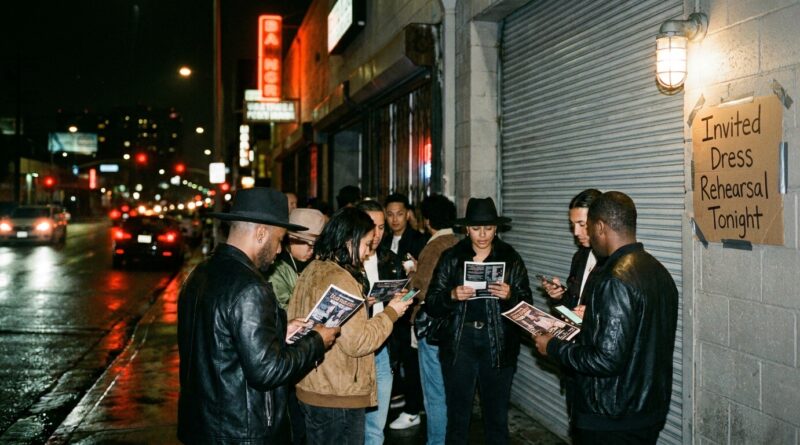
Tonight’s Immersive Theatre Beta Hack: How To Turn LA’s Secret Dress Rehearsals Into Your Own Preview Night Calendar
You are not imagining it. Los Angeles immersive theatre really does seem to appear out of nowhere, fill up instantly, then flood your feed after the fact. That is the annoying part. By the time a show looks real enough to trust, the beta nights, soft opens, and invited dress rehearsals are already gone. The good news is those early-access spots usually do leave breadcrumbs. They just are not posted in the same places as normal ticket sales. The April 24 LA casting call making the rounds is a perfect example. Hidden inside the usual casting language were clues about 2 to 3 beta tests, invited dress rehearsals, and a short runway before public launch. If you know how to read those clues, you can build your own preview-night calendar and catch immersive theatre beta tests Los Angeles early access dress rehearsal opportunities before they become polished promo campaigns.
⚡ In a Hurry? Key Takeaways
- The fastest way to find immersive theatre beta tests in Los Angeles is to track casting calls, crew posts, and volunteer language before public ticket links appear.
- Start a simple weekly system using Facebook groups, casting boards, Instagram alerts, and a private calendar for words like “beta,” “invited dress,” “soft open,” and “industry preview.”
- Stick to official signup forms and known organizers. Early access is great, but random payment requests, vague NDAs, or secretive meetups with no company name are red flags.
Why immersive shows keep selling out before you even hear about them
Most immersive productions do not start with a glossy launch. They start messy.
A creator needs live bodies in a room. Actors need scene partners. Tech needs testing. Front-of-house needs practice. Story branches need stress testing. That means producers often look for tiny audiences before they are ready to advertise widely.
Those early audiences can come from friends, mailing lists, performers, fan communities, and yes, casting-adjacent posts. Not because fans are being shut out on purpose, but because the production is still figuring out whether the thing works.
That is why the best opportunities often hide in plain sight under labels that do not sound like ticket sales at all.
The April 24 clue most fans would scroll past
The recent LA casting call matters because it showed the pattern clearly. It did not scream, “Hey, public preview tickets here.” Instead, it used language common in early-stage live entertainment: development, rehearsal runway, limited test performances, and invited dress rehearsals.
That wording tells you three useful things.
1. The show has moved past the idea stage
If a production is casting while also mentioning beta tests or invited runs, it is usually far enough along to start scheduling real audience-facing events.
2. The window is short
Immersive teams tend to move fast once the venue, cast, and tech pieces line up. A post can turn into a private RSVP list within days.
3. Audience recruitment may happen outside the ticketing platforms
This is the big one. Early invites may go through Google Forms, email lists, Instagram Stories, Discord servers, Facebook groups, or direct outreach instead of Eventbrite or a theater box office.
The words that usually signal early-access immersive theatre
If you want immersive theatre beta tests Los Angeles early access dress rehearsal listings, start treating certain phrases like alerts.
Watch for these terms
- Beta test
- Soft open
- Invited dress rehearsal
- Industry preview
- Friends and family performance
- Workshop presentation
- Proof of concept
- Private run-through with audience
- Pilot experience
- Limited capacity preview
- Audience test night
Not every one of these means public access. But they often point to a project that will need some kind of real audience very soon.
Where the hidden posts usually show up first
This is where most people miss out. They are watching press accounts and entertainment blogs. The useful stuff often appears earlier in work-oriented or community spaces.
Facebook groups
Local theater, immersive, acting, haunted attraction, and event-production groups are still surprisingly useful. Search old posts too. Some organizers post a casting notice first, then drop audience-call details in comments or follow-ups.
Casting boards
Backstage, Casting Networks, Actors Access-style communities, and local indie casting pages can reveal timelines even when the audience side is not public yet. You may not be applying as cast. You are reading the tea leaves.
Instagram Stories and Close Friends circles
Many immersive creators are much more active in Stories than in feed posts. Turn on alerts for companies, directors, producers, and venue partners, not just the show account.
Venue accounts
Sometimes the venue tips its hand before the show does. A warehouse, black box theater, or event space may tease “private previews” or a “closed run” on its own channels.
Crew hiring posts
If you see calls for stage management, front-of-house, intimacy coordination, security, or tech ops with urgent dates, that often means audience-facing events are close.
Email newsletters
Small creators still use old-school mailing lists. Join them early, even if the branding feels unfinished.
Your repeatable system for catching preview nights before everyone else
You do not need to spend all day hunting. You need a simple routine.
Step 1. Build a keyword list
Create a note on your phone with your tracked terms. Include the basics and city-specific terms:
- immersive
- interactive show
- beta test
- dress rehearsal
- soft opening
- preview
- industry night
- invited audience
- Los Angeles
- LA
- DTLA
- Hollywood
- warehouse theatre
Step 2. Follow the people behind the shows
Do not just follow the production name. Follow:
- directors
- producers
- creative directors
- casting directors
- assistant directors
- venue managers
- stage managers
The official show account is often the last place to announce anything.
Step 3. Make a three-column tracker
Use Google Sheets, Notion, or a plain spreadsheet with these columns:
- Project name
- Signal spotted
- Next expected audience step
Example: “New noir immersive project.” Signal spotted: “Casting call mentions 2 to 3 beta tests and invited dress.” Next expected audience step: “Watch Stories for RSVP form within 1 to 2 weeks.”
Step 4. Set alerts, not reminders
Reminders assume you already know the date. Alerts help when you do not. Use Google Alerts where possible, social notifications, and saved searches inside Facebook and Instagram.
Step 5. Join communities before you need them
If you only jump in when a show is hot, you are late. Join now. Read regularly. Become a familiar name if the group allows discussion.
Step 6. Respond fast and politely
Early-access lists fill because they are small. If a form appears, fill it out that day. If an organizer asks for availability, reply clearly and briefly. Nobody needs your life story.
How to reverse-engineer a project from one post
Let us say you find a casting notice that mentions an immersive production, audience interaction, and beta performances. Here is how to read it like a preview hunter.
Check the date language
If rehearsals begin soon and performances are listed vaguely, preview events may be added in a hurry. Good sign.
Check the role requirements
If performers must handle improvisation, one-on-one audience moments, or adaptive storytelling, the team will almost certainly need test audiences.
Check the venue type
Nontraditional spaces usually need operational testing. Entry flow, safety, sound bleed, and audience timing all get tested before launch.
Check whether they mention invited runs
This is the jackpot clue. “Invited dress rehearsal” often means there will be a list. Maybe small. Maybe private. But a list.
Check who posted it
If the call comes through a known creator, venue, or production company, start following all related accounts immediately.
How to turn scattered clues into your own preview-night calendar
This is the part that makes the chaos manageable.
Create calendar categories
- Likely beta tests
- Possible invited dress rehearsals
- Public previews not yet on sale
- Shows to monitor
Use date ranges, not exact dates
If a project says rehearsals run through mid-May, block a date range around the likely audience-testing period. That way you are mentally ready when the invite drops.
Color-code confidence levels
- Green: explicit mention of beta or invited dress
- Yellow: strong signs from casting and crew hiring
- Gray: rumor level only
This helps you avoid chasing every whisper while still staying ahead of official announcements.
What actually works best in Los Angeles
LA is a little different from New York or Chicago because the scene is spread out and heavily networked. A lot of opportunities flow through personal circles, creator friendships, and film-adjacent production communities.
That sounds exclusive, but it also means public clues matter more than people realize. If you are consistent, you can catch the same breadcrumbs insiders do.
Best LA habits
- Track warehouse, pop-up, and alternative venue accounts
- Watch actor and stage manager posts, not just producers
- Check late-night Stories, where soft asks often appear
- Be willing to go on odd days like Monday or Tuesday, when beta nights often happen
- Keep your schedule flexible for short-notice invites
How to avoid scams, weird invites, and time-wasting dead ends
Early access should feel exciting, not sketchy.
Good signs
- A named production company or creator
- Clear venue information, even if partial
- Professional signup forms
- Normal waiver or feedback request language
- Consistent branding across accounts
Bad signs
- Pressure to send money through cash apps with no ticketing trail
- No company name, no venue, no identifiable people
- Overly vague promises about celebrity involvement
- Requests for sensitive personal info unrelated to attendance
- Messages that move too quickly to private chat with no public post history
If it feels off, skip it. There will be other preview nights.
The easiest beginner setup if you want results this week
If all of this sounds like a lot, here is the stripped-down version.
Your 20-minute weekly routine
- Search Facebook groups for “immersive,” “preview,” “invited dress,” and “beta.”
- Check two major casting boards for immersive or interactive productions in LA.
- Open Instagram and scan Stories from five creators and five venues.
- Add any suspiciously close-to-launch project to your calendar.
- Join one email list per week from a local immersive company or venue.
Do that consistently and you will start seeing patterns before your friends do.
Why this method works better than waiting for TikTok
TikTok is where you learn what already landed. It is not usually where you learn what is about to test with a tiny audience.
By the time a creator is posting polished clips, the intimate trial runs are often over. If your goal is access, not just content, you want the pre-marketing layer. That means community posts, production posts, and semi-boring logistical posts. Those are the gold mine.
At a Glance: Comparison
| Feature/Aspect | Details | Verdict |
|---|---|---|
| Best source for early clues | Casting calls, crew hiring posts, Facebook groups, and Instagram Stories usually appear before ticketing pages. | Most reliable starting point |
| Fastest action you can take | Follow creators and venues, save keyword searches, and build a simple tracker for “beta,” “soft open,” and “invited dress rehearsal.” | Low effort, high payoff |
| Main risk | Unofficial invites can be vague or fake if there is no company name, venue trail, or secure signup process. | Use caution, verify first |
Conclusion
You do not need insider status to find these nights. You need a system. That is why this matters right now. The LA immersive casting call that dropped on April 24 is exactly the kind of opening most fans miss until everything is booked out and reposted as news. But once you reverse-engineer how that project signaled its 2 to 3 beta tests and invited dress rehearsals, the pattern gets easier to spot in any city. Watch the working posts, not just the promotional ones. Track creators, venues, and rehearsal clues. Build your own calendar before the box office link exists. That turns a messy mix of Facebook groups, casting boards, and Story posts into something useful: a real early-access pipeline for live theatre. Not after-the-fact hype. Actual preview access.