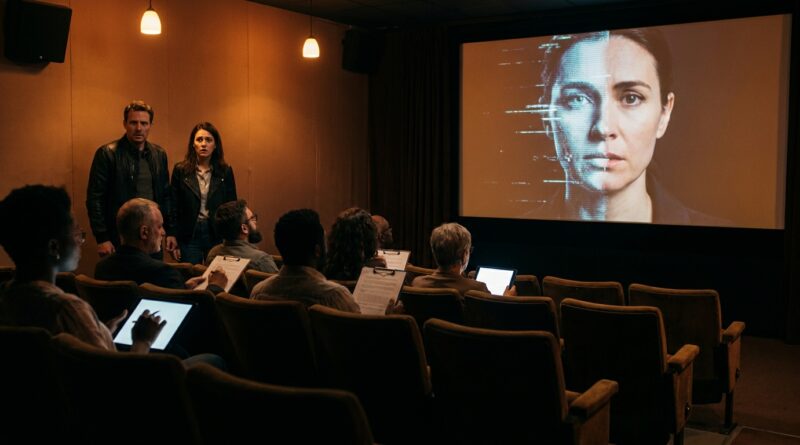
Tonight’s AI-Val Kilmer Film Hack: How One Controversial Indie Can Turn You Into Hollywood’s Next Test-Screening Insider
You can feel the gap, right? One week everyone is arguing online about AI bringing dead actors back to the screen. The next week a studio, a festival programmer, or an indie producer has already tested the idea in front of a small audience, collected notes, and moved on without you. That is the annoying part. If you care about where film is going, you usually hear about these experiments after the decision is already made. The good news is that the current fight over AI-resurrected performances is creating a rare opening for ordinary movie fans who know how to show up, watch closely, and give useful feedback. If you want AI movie test screening early access, this is one of those moments when the door is cracked open. Smaller distributors, regional theaters, festival sidebars, and online audience panels are all looking for viewers who can react like a human being, not like a hot take machine.
⚡ In a Hurry? Key Takeaways
- Yes, AI-heavy films really do seek early audiences, especially when they use recreated actors or unusual digital performances.
- Your best path in is to watch festival callouts, regional cinema chain signups, online research panels, and communities like Previewers Network that track these invites.
- The safest, smartest way to stay on the list is simple: follow NDA rules, give clear feedback, and focus on what felt convincing or unsettling on screen.
Why this odd little opening exists right now
Studios and indie teams are nervous. That is not a bad thing for viewers.
When a film uses AI to recreate an actor’s likeness, voice, or presence, the people behind it need proof that audiences will accept it. Not just critics. Not just investors. Actual people in seats. If the reaction is “this feels moving,” that helps them. If the reaction is “this is creepy and distracting,” that helps them too, because they still have time to edit, reframe, or scrap the bit that is not working.
That is why AI movie test screening early access is becoming more realistic than many film fans think. These projects often need audience reassurance before they go wide. They need to know where the line is.
What counts as an AI-related test screening?
It is not always advertised with a giant label saying “come judge our digital ghost experiment.” Usually it shows up in softer language.
Common labels to watch for
You may see phrases like “advanced audience research screening,” “unfinished cut,” “invitation-only feedback event,” “innovation in performance,” or “special festival work-in-progress screening.”
Sometimes the AI angle is hidden because the producers want honest reactions. Sometimes it is openly discussed because they want targeted feedback on the digital performance.
What they may ask afterward
Expect questions like:
- Did any performance feel unnatural?
- Did you find the character emotionally believable?
- Did any visual or vocal element pull you out of the story?
- Would controversy around the production affect your interest in seeing the finished film?
That is your clue. They are not just testing the movie. They are testing your comfort level.
Where the invites usually appear first
This is where most people miss out. They wait for a headline. You want the small notices instead.
Film festivals and side programs
Festival newsletters, local arts mailing lists, and work-in-progress announcements are worth checking. Smaller festivals are especially useful because they are more willing to run audience-feedback events without a huge publicity machine.
Regional cinema chains
Local theater chains often host “mystery” or “special preview” slots that act as soft testing grounds. If you already like chasing unknown screenings, read Tonight’s Secret Mystery-Movie Hack: How To Turn One $6 ‘Unknown Screening’ Into Your Own Early‑Access Film Lab. It is a practical way to train your eye and get comfortable spotting early-access opportunities before they are obvious.
Online panels and audience research firms
Some projects never start in a theater. They begin with secure online clips, surveys, or moderated digital focus groups. These are less glamorous, sure. But they count. If your comments are thoughtful, you can become the person they invite again.
Communities that track the callouts
This is where Previewers Network can help. A good community does not just dump links on you. It helps you spot patterns. Which festivals quietly recruit locals. Which chains run “research” nights. Which online forms are worth filling out, and which are a waste of time.
How to get AI movie test screening early access without sounding like a crank
There is a funny trap here. A lot of people who care deeply about AI in film rush in with strong opinions and zero usefulness. That is not what screeners want.
Be curious first
If you apply for a screening or panel, frame yourself as someone interested in story, performance, and audience reaction. Not as someone trying to win an ethics argument in the lobby.
Show that you can describe a reaction
The gold-standard feedback sounds like this: “The voice felt convincing in quiet scenes, but in emotional moments it seemed too clean and made the character feel less human.”
The bad version sounds like this: “AI is evil and Hollywood is doomed.”
Follow every rule
If there is an NDA, follow it. If phones are banned, put the phone away. If they ask you not to post, do not post. One leaked detail can get you cut from future invites. One solid, respectful report can get you back in the room.
What kind of feedback actually carries weight
You do not need insider language. You need specifics.
Focus on the audience experience
- When did the digital effect stop you from following the story?
- Did the recreated performance feel respectful, exploitative, distracting, or surprisingly natural?
- Would a casual viewer notice the effect, or only someone looking for it?
- Did the film explain the choice well enough inside the story?
Separate ethics from execution
This matters a lot. You can say, “I have ethical concerns about AI recreations, but within this movie the effect was handled with restraint and did not distract me.” Or the opposite. That kind of split response is useful because it tells the filmmakers whether they have a messaging problem, a craft problem, or both.
Talk about emotion, not just pixels
Film teams already have technical people judging the render, the compositing, and the voice cleanup. What they cannot fake is your emotional read. Did you feel moved? Uneasy? Manipulated? Detached? That is the heart of the test.
How one invite can turn into a steady side lane
This is the part people underestimate. You do not need 50 screenings. You need one good first impression.
Fill out the post-screening survey carefully
Do not rush. The survey is often more important than what you say walking out. Producers look for people who write clearly, notice details, and avoid drama.
Be consistent
If you sign up for online panels, actually show up. If a theater asks you to arrive early, arrive early. Reliability is boring. It is also how you get invited again.
Build a track record
Once you have attended one or two events, you start to understand how callouts are phrased and where they land first. That is how a random invite becomes a small but real spot on the indie test-screening circuit.
Red flags to watch for
Not every “special preview” is worth your time.
- If a signup page asks for money to guarantee a secret AI screening, be careful.
- If a screening promises access but gives no venue, organizer, or research partner, be skeptical.
- If the whole pitch sounds built around gossip instead of feedback, it is probably not a real test event.
Good screening programs may be secretive about the title, but they are usually clear about logistics, conduct rules, and the purpose of the event.
At a Glance: Comparison
| Feature/Aspect | Details | Verdict |
|---|---|---|
| Best places to find invites | Festival newsletters, regional theater chains, online audience panels, and Previewers-style communities that track callouts | Most reliable starting point |
| Best kind of feedback | Specific notes on believability, emotional impact, distraction level, and whether the AI use helped or hurt the story | What gets you invited back |
| Biggest mistake | Treating the screening like a rumor hunt or social media flex instead of a research event with rules | Fastest way to lose access |
Conclusion
If you have been frustrated by always hearing about AI film experiments after everyone else, this is one of those rare moments when the audience can still get in early. AI-resurrected performances are the hottest fault line in film right now, and the people making these projects are under real pressure to prove that viewers are not simply creeped out. That pressure creates opportunity. Festivals, regional cinema chains, and online panels all need thoughtful reactions from real people, and Previewers Network can help members spot where those openings appear first, what feedback matters, and how to turn a single invite into a longer run on the indie test-screening circuit. While everyone else argues ethics on social media, you can be the person in the darkened theater quietly helping shape how this next wave of AI-heavy filmmaking actually lands.