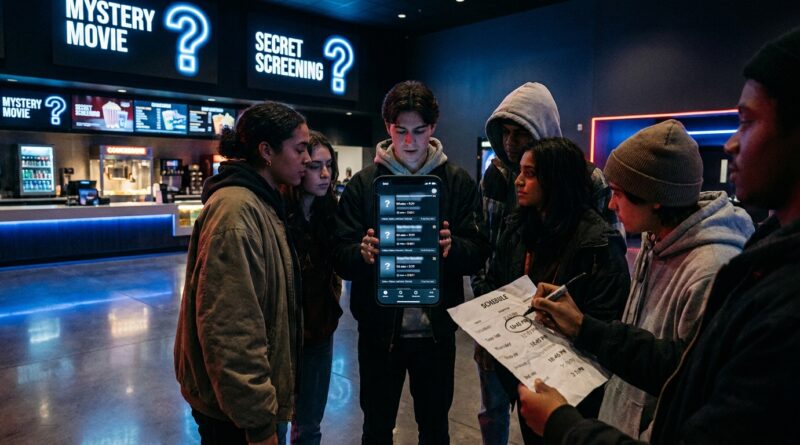
Tonight’s Secret Mystery-Movie Hack: How To Turn One $6 ‘Unknown Screening’ Into Your Own Early‑Access Film Lab
You are not crazy for feeling stuck here. Mystery movie listings look like a gamble. One app says “screen unseen,” another says “secret screening,” and all you really know is the runtime, the rating, and that the ticket is weirdly cheap. Meanwhile somebody on Reddit is already bragging that they saw next month’s thriller before the trailer even hit YouTube. That is the annoying part. It can feel random when it is not. If you treat these screenings like a little weekly film lab instead of a blind date, you can get much better at picking the ones that fit your taste. The trick is to stop asking “What is it?” and start asking “What kind of movie usually shows up in this slot, at this chain, with this runtime and rating?” Once you do that, a $6 ticket stops being a shrug and starts becoming one of the cheapest ways to catch new movies early.
⚡ In a Hurry? Key Takeaways
- The best way to pick a mystery movie is to match the chain, rating, runtime, and date to the kind of films that chain usually previews.
- Check Reddit threads, theater apps, and local listings the same day, then arrive 20 to 30 minutes early because these shows can fill up fast.
- A cheap secret screening is usually best for mid-budget thrillers, horror, action, and awards hopefuls, but always treat the rating and runtime as your main clues if you want to avoid wasting money.
Why mystery screenings feel random, even when they are not
Theater chains love mystery screenings because they fill seats on slower nights and create buzz without spending much on marketing. For movie fans, that can be great. For normal people trying to plan a Monday night, it can be maddening.
The good news is that these events usually follow patterns. AMC Screen Unseen, Regal Monday Mystery Movie, and Cineworld secret screenings do not pull titles out of a hat. They tend to book movies that need word of mouth, need a soft launch, or fit a very specific release window.
That means if you want to learn how to pick the best mystery movie and secret screenings for early access, you are really learning how to spot those patterns before everybody else does.
Start with the four clues that matter most
1. Rating
This is your first filter. If the listing says R, stop hoping it is a family movie or a prestige drama with broad appeal. R-rated mystery slots often point toward action, horror, crime, or darker thrillers. PG-13 broadens the field. PG usually means a family title or softer crowd-pleaser.
If you only like certain genres, the rating alone can save you from a wasted trip.
2. Runtime
Runtime is the clue that people underestimate. A listed runtime of 1 hour 42 minutes tells you a lot. So does 2 hours 18 minutes. Mid-budget thrillers and studio horror often land in a pretty tight range. Heavier awards films or sprawling epics stick out fast.
Studios sometimes pad or trim the posted runtime a little to keep the guessing alive, so do not treat it like a fingerprint. Treat it like a weather forecast. Helpful, not perfect.
3. Date of the screening
This one matters more than most people think. If a mystery screening lands two to three weeks before a film’s official release, that often points to a title the studio wants word of mouth for. If it is very close to release day, it may be something that is about to open wide and just needs one extra buzz push.
Look at the calendar. Then look at upcoming release schedules. A lot of the guessing game becomes much easier.
4. The chain itself
Each chain develops habits. One might favor crowd-pleasing thrillers. Another might be more willing to test stranger titles or smaller studio releases. If you go often enough, you will start seeing the personality of each program.
That is why you should keep notes. More on that in a minute.
Your weekly method for choosing the right $6 screening
Step 1. Check the app, but do not stop there
Start with AMC, Regal, Cineworld, or your local chain app. Grab the basics. Date, time, rating, runtime, premium format or standard, and price.
Then check fan threads and discussion boards. People often compare ratings, runtimes, poster slots, and hidden metadata faster than the theaters update their own pages.
Step 2. Build a shortlist of likely titles
Now pull up upcoming release schedules for the next three to four weeks. Ignore giant obvious tentpoles at first. Mystery slots are often used for movies that need discovery. Think thriller, horror, action, adult drama, or modest studio titles that might play better if audiences stumble into them.
If there are only three R-rated wide releases coming soon and only one matches the runtime range, you have your likely winner.
Step 3. Ask the practical question nobody asks
Would you still be okay paying $6 if the guess is wrong?
That sounds simple, but it is the sanity check. If the rating and runtime suggest a type of movie you usually dislike, skip it. Early access is fun. Sitting through two hours of something that was never your thing is not.
Step 4. Arrive early
This is not a trick. It is just useful. Mystery screenings can draw a surprisingly sharp crowd, especially once the online guesses get hot. If you want a decent seat, show up 20 to 30 minutes early. If your theater has reserved seating, great. If not, do not cut it close.
How to turn one mystery screening into your own early-access film lab
This is where most people leave value on the table. They guess a title, watch the movie, post “wow that was fun,” and move on. Instead, start tracking what happened.
Keep a simple note on your phone
After each screening, log:
- Theater chain and location
- Date and weekday
- Listed rating and runtime
- Actual movie title
- Days before official release
- How full the theater was
- Whether there were trailers, intros, or surveys
That tiny record turns guesswork into a pattern log. After a few screenings, you may notice your local Regal tends to get action thrillers while your nearby AMC gets more awards-adjacent dramas. That is useful intel.
Watch for survey signals
If a screening includes a QR code survey, comment card, or unusually strict phone rules, pay attention. You may be closer to a true testing ecosystem than you think. That does not mean every mystery movie is a test screening. Most are not. But people who reliably show up for these events, pay attention, and know the local theater rhythm are in a much better position to spot future preview invites.
If horror is your lane, our guide to Tonight’s Secret Horror Screenings Shortcut: Turn Mystery Movie Nights Into Your Personal Test-Screening Circuit is worth a read too, because horror fans often get some of the best early-access opportunities.
What kinds of movies show up most often
Right now, the sweet spot is not always giant superhero fare or mega-franchises. It is often the movies that need a little help finding their audience.
- Mid-budget thrillers
- R-rated action movies
- Studio horror releases
- Adult-skewing dramas
- Awards hopefuls that benefit from early chatter
That matters because it helps set your expectations. If your dream is to see the biggest blockbuster on earth a month early, mystery nights may disappoint you. If you like catching the “wait, this was actually good” movie before the marketing machine wakes up, these events can be fantastic.
Red flags that tell you to skip a screening
The clues do not match your taste
If the rating, runtime, and release calendar point toward a genre you never enjoy, do not talk yourself into it just because it is cheap.
The theater is too vague even by mystery standards
A little secrecy is normal. But if a listing has inconsistent times, no rating, odd runtime changes, or last-minute app glitches, double-check before heading out.
You are expecting spoilers from strangers
Online threads can help, but they can also turn into noisy guess piles fast. Use them for clues, not certainty. The goal is to improve your odds, not pretend you have cracked a studio code.
How to stack mystery nights with local preview invites later
This is the long game. Mystery screenings are public. Test screenings and preview invites are often more targeted. But the habits overlap.
When you know which theaters host unusual events, which nights are used for soft launches, and which studios seem active in your area, you become much better at spotting the next opportunity. Maybe it is a survey-heavy preview. Maybe it is a local research screening. Maybe it is just another secret show that everybody else ignores until the Reddit post blows up.
Either way, you are not starting from zero anymore. You have a map.
At a Glance: Comparison
| Feature/Aspect | Details | Verdict |
|---|---|---|
| Best clue to use first | Rating and runtime narrow the field fastest, especially for thrillers, horror, and action movies. | Most useful starting point |
| Best value move | Use a cheap mystery ticket on titles you would likely watch anyway, then log the result for future pattern spotting. | Smart repeatable strategy |
| Biggest mistake | Chasing online hype without checking whether the clues actually fit your taste or the likely release schedule. | Skip the guess frenzy, trust the pattern |
Conclusion
Mystery and early-access screenings are having a quiet moment right now, and that is exactly why they are useful. The big chains are running more of them. The likely picks often land in that sweet spot of mid-budget thrillers, R-rated action, horror, and other movies that do not get wall-to-wall marketing until right before release. Most people treat AMC Screen Unseen, Regal’s Monday Mystery Movie, and Cineworld’s secret screenings like a guessing game. You can treat them like a system. Check the rating, runtime, release window, and chain habits. Pick the screening that matches your taste. Show up early. Log what you saw. Do that a few times and you stop doom-scrolling for clues and start building a real early-access routine. That is the win here. One cheap “unknown” ticket can become a repeatable way to see movies before the rest of the audience even knows what is coming.