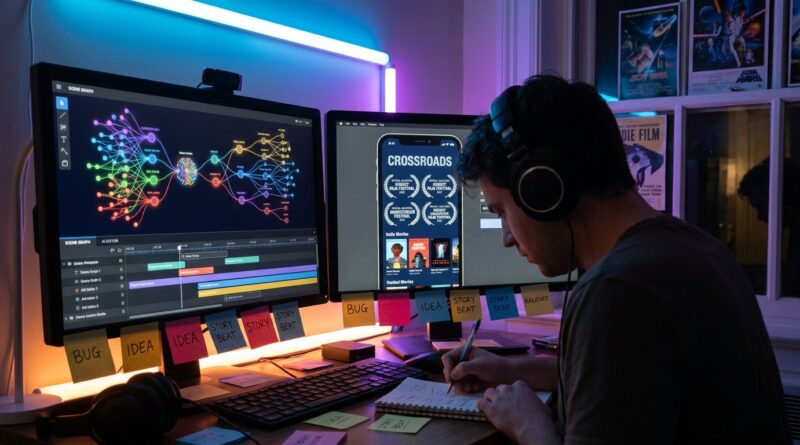
Tonight’s AI Cinema Beta Shortcut: How To Turn Aihollywoods And Crossroads Into Your Personal Virtual Film Lab
You know that feeling. You spot a cool new AI film app on social, click through, and by the time you get there, the waitlist is packed, the beta is closed, and somehow every good handle is gone. It can feel like you are always arriving five minutes too late. That is exactly why this moment matters. With tools like Aihollywoods and the Crossroads app still early, there is a real chance to do more than watch flashy demo clips. You can help shape how these apps actually work. If you care about storytelling, short films, editing, prompts, or just being one of the people who gets invited before public launch, these ai movie beta testing opportunities aihollywoods crossroads app watchers are chasing are worth your attention. The trick is to move early, test thoughtfully, and leave useful feedback. Right now, smart early users are far more valuable to these startups than passive followers.
⚡ In a Hurry? Key Takeaways
- Yes, there are still real early-entry openings for AI cinema tools like Aihollywoods and Crossroads if you act before wider publicity hits.
- Apply fast, then stand out by giving specific bug notes, workflow feedback, and examples of what felt exciting or confusing.
- Do not treat beta apps like finished products. Protect your privacy, save copies of your work, and check ownership rules before uploading serious projects.
Why these beta invites matter more than they look
A lot of people assume beta access is just a bragging right. It is not. In creative software, early users often shape the product more than any marketing team does.
That is especially true with AI movie tools. Startups in this space are still figuring out basic questions. What should the script workflow look like? How much control should users have over scenes, voices, pacing, style, and edits? What makes a generated clip feel cinematic instead of cheap? They need people who can answer those questions in plain English.
If you can explain, “This shot builder is fun, but I cannot keep character consistency across scenes,” that is useful. If you can say, “The app made a cool trailer, but I still need an easier way to steer tone,” that is even better.
That kind of feedback gets remembered.
What Aihollywoods and Crossroads are really offering
Even if the exact feature sets change during beta, these tools sit in a very attractive lane. They are trying to turn AI filmmaking from a novelty into a repeatable creative process.
Aihollywoods looks like the “idea to visual” lane
Think fast concept creation. Mood, scenes, trailers, stylized film moments, and rough cinematic experiments. This is the kind of platform that attracts creators who want to see ideas quickly, test genres, and build proof-of-concept clips without renting gear or learning heavy editing software first.
Crossroads feels more like the “story decisions and interactive structure” lane
The name alone suggests branching, choice, and story paths. That makes it appealing if you like interactive storytelling, narrative design, or apps that blur the line between film, game, and visual novel. For testers, this means the feedback is not just about graphics. It is about pacing, logic, scene transitions, and whether choices feel meaningful.
Put simply, one may attract visual experimenters. The other may attract story architects. Plenty of people will want both.
How to find real ai movie beta testing opportunities aihollywoods crossroads app fans should watch
This is where people miss out. They wait for a polished announcement, or they assume the public website is the only place to apply. Often, the best openings show up in smaller channels first.
Check these places first
Start with the official sites, of course. Then look at the founders’ social accounts, product update posts, Discord servers, creator communities, and launch comments on sites like Product Hunt or X. Beta links often appear there before they are cleaned up and heavily promoted.
If you are part of Previewers Network, this is exactly the sort of opening that can pay off. Smaller, under-the-radar invites are where members can get recurring test access before the crowd piles in.
Do not ignore the boring sign-up form
Most people rush through beta applications. Big mistake. If the form asks why you want access, do not write “looks cool.” Write something useful.
For example:
“I test story tools and short-form creative apps. I can give feedback on prompt control, scene continuity, output quality, and ease of use for non-pro editors.”
That tells them you are not there just to play around for five minutes.
Use a simple tester profile
You do not need to be a film school graduate. You just need to be easy to understand. Call yourself what you are. Short film hobbyist. Scriptwriter. Video editor. Story app reviewer. Creative tech tester. That is enough.
How to become the kind of beta user startups want to keep
Getting in is step one. Staying useful is what gets you invited back.
Report what broke
This part is obvious, but be specific. Not “it glitched.” Say what you clicked, what you expected, and what happened instead.
Example: “I generated three related scenes with the same lead character. Scene one worked, but scene two changed age and wardrobe with no warning.”
Report what felt magical
This part matters just as much. Startups need to know which moments feel like the future. If a tool turned a messy paragraph into a surprisingly strong teaser scene, say so. If a branching choice suddenly made a story feel alive, say that too.
Good product teams look for delight, not just defects.
Report what confused you
Confusion is gold in beta testing. If you could not tell whether something was a script input, a style prompt, or a camera control, mention it. That usually points to weak design, not user failure.
What you can realistically get out of early access
It is easy to think beta testing only helps the company. That sells your role short.
Portfolio material
If the terms allow it, your experiments can become examples of your creative thinking. Maybe not polished masterpieces, but proof that you understand emerging film tools before most people do.
A reputation for useful feedback
Product teams talk. If you become known as someone who gives clear, calm, practical notes, you are more likely to get private builds later.
A front-row seat to how AI film tools are changing
This space is moving fast, but not all movement matters. Being inside betas helps you separate real progress from flashy promo videos.
What to watch out for before you upload your best ideas
This is the boring grown-up section, but it is important.
Check ownership and usage terms
Some beta tools are generous. Some are vague. Before you upload a script, voice sample, concept art, or character idea you care deeply about, check what rights the platform claims over inputs and outputs.
Assume bugs will happen
Save your prompts, downloads, scripts, and clips elsewhere. Beta tools can change features overnight. Sometimes they lose projects. Sometimes a beautiful output cannot be recreated.
Be careful with personal data
Do not upload private client work, confidential material, or anything that could create a headache later. Test with smart, lower-risk material first.
A simple playbook for tonight
If you want to stop being the person who hears about these tools after the buzz, keep it simple.
Step 1: Look up both tools tonight
Search official pages, founder accounts, beta forms, Discord links, and recent posts. Move now, not next week.
Step 2: Apply with a useful one-paragraph intro
Explain what kind of creator or tester you are, what you can evaluate, and why you care about AI storytelling.
Step 3: Prepare a starter test idea
Have one sample concept ready. Maybe a 30-second noir trailer. A branching romance scene. A sci-fi monologue. A fake movie teaser. You want to test immediately once access arrives.
Step 4: Keep notes as you test
Write down what worked, what failed, what surprised you, and what you wanted but could not do.
Step 5: Send feedback people can act on
Short. Specific. Friendly. Product teams love that.
At a Glance: Comparison
| Feature/Aspect | Details | Verdict |
|---|---|---|
| Best use case | Aihollywoods appears better suited for fast cinematic concepting, while Crossroads may be stronger for branching stories and interactive narrative tests. | Try both if you can. They likely solve different creative problems. |
| Value of beta access | Early users can influence workflow, feature priorities, and usability before public release hardens the product. | Very strong if you give detailed feedback instead of just browsing. |
| Main caution | Beta tools may have unstable output, unclear rights terms, and limited project reliability. | Great for experiments. Be careful with sensitive or high-stakes work. |
Conclusion
If you have been feeling like every promising creator app is already crowded before you even hear about it, this is one of those rare moments when that may not be true. There is a narrow window right now where AI-driven film tools need thoughtful early users who can explain what works, what breaks, and what feels magical. That is your opening. By jumping on beta links for tools like Aihollywoods and Crossroads while they are still under the radar, Previewers Network members can lock in repeat testing chances, build portfolio-worthy experiments, and become the people future AI cinema startups want in private builds before launch. You do not need to be famous. You just need to be early, curious, and useful.