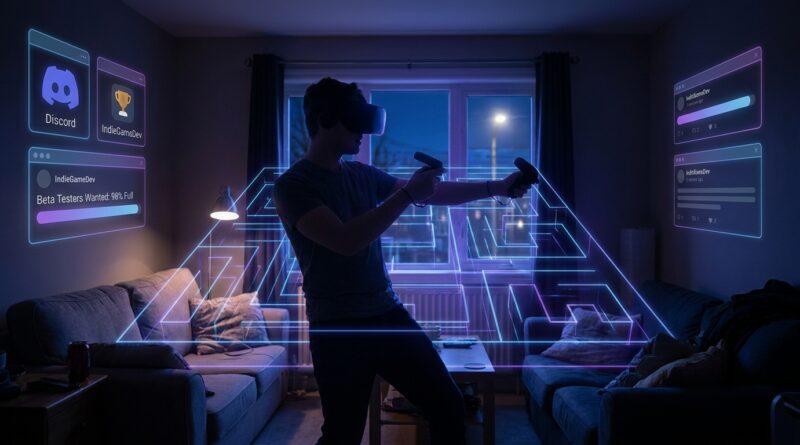
Tonight’s Secret VR Maze Game Beta: How One 30‑Minute Playtest Can Turn You Into The Friend Who Always Knows The Next Wild Headset Experience
You did not buy a VR headset just to replay the same polished hits forever. That is the annoying part of VR right now. Fresh ideas are out there, but they often live in tiny Discord servers, tester subreddits, and half-buried Facebook posts. By the time a clever maze game finally reaches your feed, the surprise is gone, the best routes are already on YouTube, and you are once again the person hearing about it after everyone else. Tonight is the kind of window that fixes that. A small VR maze game beta is looking for real players for a short 30-minute test, and this is exactly the sort of chance that can turn your dusty headset into a front-row pass for weird, creative experiments before they become crowded. Better yet, if you know how to reply quickly, check if the invite is real, and leave useful feedback, you can build a reputation that gets you more test invites, free keys, and sometimes even paid playtesting work.
⚡ In a Hurry? Key Takeaways
- If you are searching for vr game beta testers wanted posts, the best opportunities are often in small communities and disappear fast, sometimes within hours.
- Reply with your headset model, availability, VR experience, and a short note that you can give clear bug and comfort feedback.
- Stick to legit tests that use known platforms, clear dev identities, and simple signup steps. Avoid anything asking for strange downloads, money, or personal financial info.
The beta worth jumping on tonight
The opportunity here is simple. A small developer is running a short VR maze playtest, roughly 30 minutes, for players who can hop in quickly and give notes on navigation, puzzle clarity, comfort, and whether the maze feels clever or just confusing.
That may not sound glamorous. It is actually one of the best ways to discover the next memorable headset experience before it turns into a crowded launch-week scramble. Maze and puzzle prototypes are especially fun to test because they live or die on first impressions. The developer needs people who have not already memorized the solutions. You, the random curious headset owner, are exactly the person they need.
And yes, this is why these posts vanish so quickly. Small VR teams do not need ten thousand players. They need ten decent ones.
Why tiny VR betas are such a gold mine
Big-name VR releases are easy to hear about. They are on storefront banners, gaming sites, and every headset recommendation list. But the most interesting stuff often starts as a rough prototype with placeholder walls, janky hands, and one genuinely smart idea.
That rough phase is where you can still be surprised.
If you join now, you get three things at once. First, you play something new before the internet has solved it for you. Second, you help shape the final game. Third, you start building a tester reputation. Developers remember the people who show up on time, explain problems clearly, and do not just write “pretty fun” and disappear.
How to find legit “vr game beta testers wanted” posts before they sink
Start where real developers actually post
The best places are usually not flashy. Look in VR tester subreddits, indie VR Discord servers, small Facebook groups for Quest or PC VR fans, and game-dev communities where makers share prototypes.
Search terms matter. Try:
“vr game beta testers wanted”
“Quest beta testers”
“SteamVR playtest”
“VR prototype feedback”
“VR maze test”
Sort by newest. That part matters more than people realize. A good beta request can be buried under junk within a day.
Know the signs of a real invite
A legit post usually includes a few basics:
- The headset or platform needed, like Quest 2, Quest 3, Pico, or PC VR
- The test length
- What kind of feedback the dev wants
- A known signup path, such as Discord, Google Form, Steam Playtest, SideQuest, or App Lab
- A visible dev profile, studio page, or gameplay clip
It does not have to look fancy. Small teams are often messy. But it should look coherent.
Watch for the red flags
Skip any “beta” that asks for money, crypto, remote access to your PC, or weird software installs from random file hosts. You should not need to hand over your card number to test a maze game. You also should not need to turn off all your security settings just to get in.
If the post is vague, the account is brand new, and the only instruction is “DM me for secret build,” be careful. Not every rough-looking post is fake, but you want enough details to feel comfortable.
How to respond fast so you actually get picked
This is where most people blow it. They send “looks cool, interested” and then wonder why they never hear back.
Developers need signal, not enthusiasm alone.
Use a reply like this:
“Hi, I can test tonight. I have a Quest 3 and PC VR access. I have played room-scale puzzle games and comfort-heavy movement games, and I can give feedback on controls, motion comfort, puzzle clarity, and bugs. I am free between 8 and 10 PM Eastern.”
That tells the dev five useful things in seconds. Your hardware. Your experience. What kind of feedback you can provide. Your availability. And that you are probably not going to ghost them.
What to include in your message
- Your headset model
- Your time zone and available window
- Whether you can record footage or screenshots if allowed
- Your experience with puzzle, movement, or multiplayer VR games
- A quick promise that you will leave structured feedback
Keep it short. You are not applying to grad school. You are making it easy for a stressed indie dev to say yes.
What to do during a 30-minute VR maze playtest
You do not need to act like a game critic. You do need to pay attention.
A good tester notices where they got confused, where they felt impressed, and where they felt slightly sick. That is useful information. Fancy vocabulary is not.
Pay attention to these four things
- First-minute friction. Was setup easy. Did you understand the goal right away.
- Movement comfort. Smooth turning, teleporting, ladders, crouching, or sudden camera shifts can make or break a test.
- Puzzle readability. Were clues satisfying, or were you wandering because the game failed to explain itself.
- The “wow” moment. If the maze had one really smart idea, tell them exactly when it hit.
That last one is important. Developers hear plenty about bugs. They also need to know what to keep.
How to leave feedback that sounds professional
You do not need special training. Just be clear and specific.
Bad feedback: “Movement felt weird.”
Better feedback: “On Quest 3, smooth locomotion felt fine in straight hallways, but turning tight corners while the wall textures flickered made me lose my sense of direction. I wanted a slower default turn speed.”
See the difference? One is a shrug. One is something a developer can use tomorrow morning.
A simple feedback format that works
- What I liked: One or two specific moments
- What confused me: Where you got lost or misread a clue
- Comfort issues: Any motion sickness, camera oddities, or hand-control trouble
- Bugs: What happened, where, and whether you could repeat it
- My one big suggestion: The single change you think would help most
If the developer gave you a feedback form, use it. If not, send your notes in tidy bullet points. That alone makes you memorable.
How this turns into more invites, early keys, and paid tests
Here is the part people miss. One good beta is rarely just one beta.
Indie VR is a small world. If you show up, communicate well, and avoid being dramatic, you start to become the person developers trust. That trust can lead to repeat invites, private Discord roles, closed alpha spots, and occasional paid testing gigs.
You do not need a big social following. You need to be reliable.
Think of it this way. Your headset may be sitting there waiting for a reason to feel exciting again. These tiny tests are that reason. Instead of using VR only when a huge studio finally drops something new, you can start treating it like a discovery tool.
A quick safety and common-sense checklist
- Use your regular platform accounts. Do not make strange side payments.
- Read whether the build is for App Lab, Steam Playtest, SideQuest, or direct sideloading.
- Check that your playspace is clear. Maze games can make you turn more than you expect.
- Ask if footage or screenshots are allowed before posting anything.
- Do not share NDA material if the test is private.
That last point matters. If you want more invites, be the person who can keep their mouth shut when asked.
At a Glance: Comparison
| Feature/Aspect | Details | Verdict |
|---|---|---|
| Where to find the best beta posts | Small VR Facebook groups, tester subreddits, Discord servers, Steam Playtest notices, App Lab and SideQuest communities | Best if you sort by newest and check daily |
| What gets you accepted | Fast reply, headset model, time zone, short experience summary, promise of clear feedback | Very strong. This is what makes you look useful, not random |
| How to avoid bad or fake tests | Use known platforms, verify the dev profile, avoid money requests, skip suspicious downloads or vague DMs | Essential. A real beta should feel organized, even if it is rough |
Conclusion
If your VR library feels stale, this is one of the easiest ways to fix it tonight instead of waiting for the next giant release cycle to notice you. Right now there are VR developers in small Facebook groups and tester subreddits actively asking for real players to run their mazes, puzzle rooms, and arena prototypes, and many of those posts disappear within a day under job spam and generic survey clutter. If you can spot the legit ones, answer quickly, and leave feedback that is clear and useful, your idle headset stops being a gadget you feel guilty about and starts becoming a discovery engine. Better still, one solid 30-minute playtest can be the beginning of a track record. That track record is what gets you early keys, repeat invites, and sometimes paid tests down the line. So if you see a real vr game beta testers wanted post tonight, do not overthink it. Jump in, take notes, and be the friend who finds the wild stuff first.