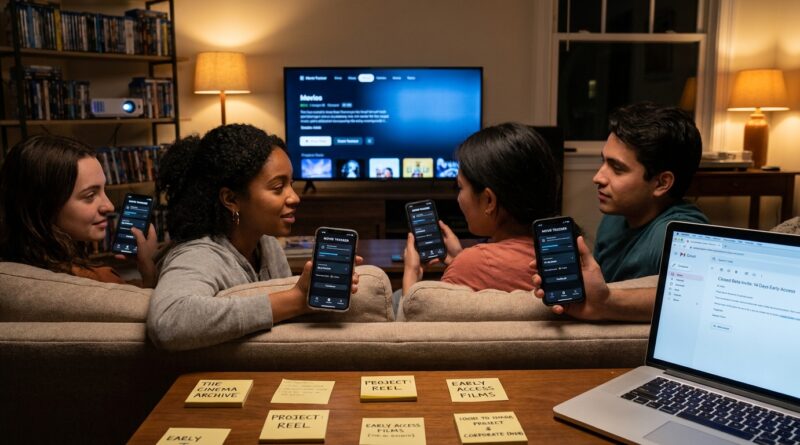
Tonight’s Secret Movie‑Tracker App Beta: How One 14‑Day Test Can Turn You Into The Friend Who Always Knows What To Watch Next
You open Netflix, then Hulu, then Max, then Prime, then that one app you forgot you still pay for. Twenty minutes later, nobody has picked anything, your group chat is arguing about whether a three-hour crime drama counts as “easy viewing,” and somehow the cool secret screening or buzzy new series already happened without you. That is exactly why a closed beta movie tracker app testers opportunity is worth caring about right now. A few indie apps are quietly inviting US users into short 10 to 14 day tests. One of the more interesting examples is a movie-tracker beta focused on watchlists, friend recommendations, alerts for limited screenings, and cleaner “what should we watch tonight?” picks. The appeal is simple. You get early access, a real chance to shape the app, and sometimes perks like temporary streaming access or gift cards. Better still, if you test it well, you build a track record that helps you get picked for future betas too.
⚡ In a Hurry? Key Takeaways
- A short closed beta for a movie tracker app can give you early access to smarter recommendations, screening alerts, and watchlist tools before the public sees them.
- Your best move is to apply fast, test it daily for 10 to 14 days, and send clear feedback with screenshots and specific examples.
- Stick to legit invites, read the privacy terms, and save proof of your testing work because that can help you get into future betas.
Why this matters right now
Most movie fans do not have a movie problem. They have a movie-finding problem.
The hard part is not that there is nothing to watch. It is that everything is spread across too many apps, too many lists, and too many people with different tastes. One friend wants horror. Another wants comfort TV. You want something new, but not so new that it turns into homework.
That is where these indie tracker betas come in. A good one tries to do three simple jobs well. It keeps your watchlist clean. It learns what you actually like. It helps you spot things before they are already old news.
The concrete opportunity: a 14-day indie movie-tracker beta
Right now, the most useful kind of invite to look for is a US-only closed test for a movie discovery and tracking app running roughly 10 to 14 days. The exact app names change fast because many of these tests are quiet, invite-limited, and sometimes handled through TestFlight, Google Play closed testing, Discord communities, or small sign-up forms.
What makes this specific kind of beta valuable is the short window. It is long enough to show whether the app fits your real life, but short enough that normal people can actually finish the test without turning it into a part-time job.
What these apps usually include
You will often see some mix of:
- Unified watchlists across multiple streaming services
- Alerts for new releases, indie drops, or limited screenings
- Friend activity feeds and shared picks
- Recommendation engines based on your ratings and saves
- Simple “pick something for tonight” tools
- A diary or tracker for what you finished and when
If that sounds a little like a mash-up of Letterboxd, JustWatch, and a group-chat referee, that is because many founders are trying to solve exactly that mess.
How to actually get picked as a closed beta movie tracker app tester
This is the part people miss. They hear about a beta, think “I’ll do that later,” and by the next day the slots are gone.
1. Apply like a helpful tester, not a freebie hunter
On the sign-up form, be specific. Do not just write “I love movies.” Half the internet loves movies.
Say things like:
- How many streaming apps you regularly use
- Whether you track films now with Notes, Letterboxd, spreadsheets, or screenshots
- How often you watch movies or series each week
- Whether you often choose for a partner, family, or friend group
- What frustrates you most, such as duplicate watchlists or missing release alerts
Founders want testers who will notice problems and explain them clearly.
2. Mention your device and habits
Tell them if you use iPhone, Android, tablet, smart TV casting, or a mix. Mention if you switch between devices a lot. That is useful testing data.
3. Be fast and easy to contact
Use an email you actually check. If they ask for Discord or TestFlight readiness, say yes only if true. Closed beta spots often go to the people who respond first and look organized.
If you want a broader playbook for finding these kinds of early invites, How To Be The First Audience For AI‑Driven Films And Apps In 2026 is a useful companion read because the same basic rules apply. Speed matters. Clear feedback matters more.
Your 14-day battle plan
Here is how to test one of these apps so you are genuinely useful and not just tapping around for five minutes.
Days 1 to 3: Set it up like real life
Import your watchlist if the app allows it. Add at least 20 titles manually if it does not. Rate a mix of movies you loved, hated, and felt neutral about. Follow a few friends if that feature exists. Turn on alerts.
The goal is to give the recommendation system enough to work with.
Days 4 to 7: Stress the discovery tools
Try to answer real questions with it:
- What should I watch tonight in under two hours?
- What is new this week that fits my taste?
- What can two people agree on?
- What indie or limited-release film would I have missed?
If the app fails, note exactly how. “Recommendations were bad” is weak feedback. “After rating six sci-fi thrillers and three documentaries, the app kept suggesting broad family comedies” is useful.
Days 8 to 11: Test the social and alert features
Share a list. Create a group watch idea. See if notifications arrive too often or too late. If screening alerts are included, check whether they are relevant to your city or region.
This is often where indie apps either become really handy or really annoying.
Days 12 to 14: Send polished feedback
Developers love testers who save them time.
Use a simple format:
- Bug: Search freezes when filtering by genre on Android 14
- What I did: Opened Discover, selected Thriller and 2024 releases, tapped sort by rating
- What happened: Screen stalled for 15 seconds, then reset filters
- What I expected: Filtered results to stay visible
- Proof: Screenshot or screen recording
Then add two or three “feature wish” notes. Keep them realistic.
What makes you a standout beta tester
You do not need to sound technical. You need to be observant.
Good feedback sounds like this
“I liked the shared watchlist feature, but my partner and I could not tell which titles were available on both our services. A small streaming badge would help.”
Bad feedback sounds like this
“Needs work.”
That kind of vague note helps nobody.
Think like a normal user
The best testers spot friction that builders stop seeing. Is the sign-up flow too long? Is the home screen busy? Does it take too many taps to get a useful recommendation? Those are not tiny issues. They are often the whole game.
How to turn one beta into future invites
This is where things get fun. One short test can become your calling card.
After the beta ends, save:
- Your acceptance email
- A screenshot of the beta dashboard or invite
- Two or three examples of feedback you sent
- Any thank-you note or follow-up from the team
Now you have proof that you did more than sign up. You participated.
The next time you apply for a film app, screening platform, or recommendation engine beta, you can say: “I completed a 14-day closed movie-tracker test, submitted bug reports and usability feedback, and I’m comfortable testing recommendation, notification, and social features.” That instantly puts you ahead of casual applicants.
Watch-outs before you join
Early access is nice. Blind trust is not.
Check privacy basics
If the app wants access to contacts, location, or viewing history, read why. Some of that may be needed. Some may be too much for a tiny test.
Do not assume every beta is polished
Crashes happen. Empty catalog pages happen. Weird recommendations definitely happen. That is normal in a closed test.
Look for signs it is legit
- A clear company or founder identity
- A proper sign-up page or TestFlight/Google Play flow
- A privacy policy and contact email
- Reasonable reward language, not wild promises
If a “beta” asks for strange payments, pushes crypto nonsense, or feels vague about who built it, walk away.
Why these small movie apps can be more useful than giant platforms
Big streaming apps want to keep you inside their walls. Small discovery apps usually have to be more practical. They know you already use five services. Their whole pitch is helping you sort the mess.
That means beta testers can have real influence. Your note about duplicate watchlists or late notifications may actually shape the product. In a giant app, your complaint vanishes into a support form. In a small 14-day beta, the founder might reply the same afternoon.
At a Glance: Comparison
| Feature/Aspect | Details | Verdict |
|---|---|---|
| Time commitment | Most closed tests run 10 to 14 days, which is enough to test recommendations, watchlists, alerts, and social features in normal use. | Excellent for busy people. Short, but meaningful. |
| Tester value | You may get early access, direct contact with builders, possible perks, and proof of beta experience for future applications. | High value if you actually participate. |
| Risk and caution | Some apps are rough, privacy terms vary, and not every invite is worth trusting without a quick check. | Safe enough if you verify the source and share only what feels reasonable. |
Conclusion
If you are tired of bouncing between streaming apps and still ending up with nothing picked, this is one of those small opportunities that can quietly pay off. Right now a wave of indie movie-discovery and tracking apps is recruiting US users for short closed tests, and those 10 to 14 day windows are exactly what most people miss. Jump into one, test it like a real person, send smart feedback, and keep a record of what you contributed. You could come out of it with a better tool for finding what to watch next, a little free streaming or other beta perks, and a stronger shot at the next invite that lands. For movie fans who like being early, useful, and just a bit ahead of the group chat, that is a pretty good deal.