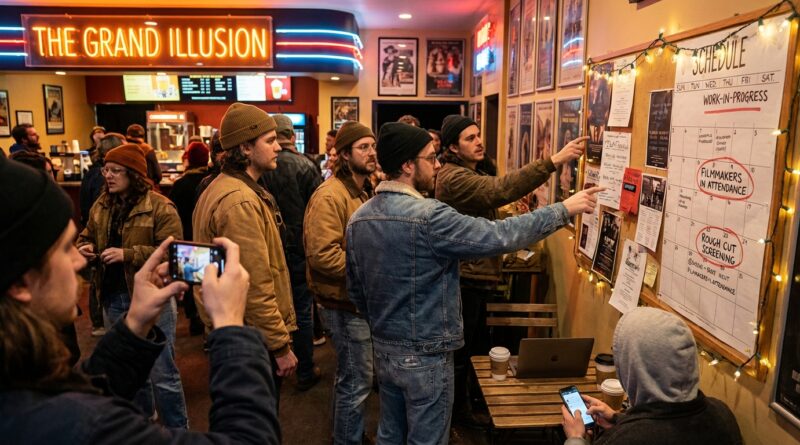
Tonight’s Live Test Screenings: How To Crash Local ‘Work‑In‑Progress’ Film Events Before They Lock The Doors
You are not imagining it. The most interesting local film events often feel like they are announced in a whisper, then gone by midnight. One friend posts a blurry lobby photo from a “rough cut with director Q&A,” somebody else casually mentions a first-look trailer night, and you are left wondering how everyone else found out first. If you want to know how to find work-in-progress film screenings near me, the good news is this is usually less about having secret connections and more about checking the right places fast. A lot of these screenings live on art-house theater calendars, museum film program pages, university screening lists, indie venue newsletters, and tiny festival Instagram stories. The trick is building a 10-minute search routine for tonight, not waiting for a perfect public roundup that rarely exists. Once you know where these events hide, you can spot same-day openings before the seats disappear or the doors close.
⚡ In a Hurry? Key Takeaways
- The fastest way to find work-in-progress film screenings near you is to scan local art-house cinemas, museums, micro-festivals, universities, and filmmaker-friendly venues directly, not general ticket sites alone.
- Use a same-day routine: Google your city plus “work in progress,” “rough cut,” “sneak preview,” “filmmaker in attendance,” and check Instagram Stories and venue newsletters.
- Always read the event rules before showing up. Some test screenings ban phones, late entry, or public reactions on social media.
Why these screenings are so easy to miss
Most local early film events are not marketed like studio premieres. They are often posted as plain calendar entries, newsletter blurbs, or one-off social posts. Some are meant to feel informal. Some are still unfinished, so organizers keep promotion light on purpose.
That means you can miss them even if you are actively looking. Ticket apps tend to surface the big releases first. Search results get crowded with mainstream showtimes. Meanwhile, the thing you actually want is hiding on page three of a museum calendar.
That is why the best method is not one magic website. It is a small checklist you can run every afternoon or early evening.
Your 10-minute hunt for tonight’s screenings
1. Start with very specific Google searches
Skip broad searches like “movies near me.” They are too noisy. Search your city or region with phrases that match how organizers describe unfinished or early-access events.
Try searches like these:
- “[your city] work in progress film screening”
- “[your city] rough cut screening”
- “[your city] filmmaker in attendance tonight”
- “[your city] first look trailer night”
- “[your city] sneak preview independent film”
- “[your city] museum film program calendar”
- “[your city] art house cinema events tonight”
- “[your city] micro festival film screening”
Add words like “tonight,” “today,” “calendar,” or “tickets” to narrow it down. If your city is large, search by neighborhood too.
2. Check art-house and repertory cinema calendars directly
This is where a lot of hidden gems show up. Art-house theaters often host preview nights, local filmmaker showcases, restoration previews, and test-audience events that never hit major listing sites in a useful way.
Look for menu items like:
- Special Events
- One-Night Only
- Community Screenings
- Filmmaker Q&A
- Work-in-Progress
- Festival Partners
If a venue has a newsletter signup box, use it. This is one of the few places where being on an email list still pays off quickly.
3. Do not skip museums, universities, and cultural centers
This is the part most people miss. Museums and campus film departments regularly host early cuts, artist talks, shorts showcases, and “open process” screenings. They may not use the phrase “test screening,” but the event is basically the same thing for a local audience.
Check:
- University cinema studies departments
- Film schools
- Museum film series pages
- Media arts nonprofits
- Cultural institutes and embassies
These pages often look a little old-school. That is fine. Ugly calendar pages can hide the best events.
4. Use Instagram like a scanner, not a scrolling app
Instagram is where last-minute film announcements go to live and vanish. Stories are especially useful for same-day changes, standby lines, or a surprise guest appearance.
Search for:
- Local theaters
- Film collectives
- Micro-festivals
- Independent filmmakers in your city
- University film clubs
Then check tagged posts and Stories. A venue may post “doors at 7” only there. A filmmaker may share the event while the venue buries it in a weekly calendar.
Words that usually signal a hidden early-access screening
Not every event will say “work in progress.” Organizers use lots of softer labels. If you are trying to find work-in-progress film screenings near me, watch for these phrases:
- Rough cut
- Assembly cut
- Sneak preview
- First look
- Preview screening
- In conversation with the director
- Filmmaker in attendance
- Members preview
- Secret screening
- Unannounced feature
- Festival warm-up
- Works in progress showcase
If the listing sounds a little vague, that can be a good sign.
Where people waste time
Relying only on big ticket platforms
Fandango-style services are fine for standard showtimes. They are not built for local oddball events. If you only check those, you will keep seeing the same blockbuster listings while the rough-cut premiere happens two miles away.
Checking once a week
These events appear late. Sometimes very late. A screening can go live in the afternoon and sell out by dinner. Same-day checking matters.
Ignoring tiny festivals
Micro-festivals, neighborhood arts groups, and pop-up screening series can be better than the larger festivals if your goal is early access. They need engaged audiences and tend to welcome newcomers.
A simple repeatable system that actually works
If you want a routine you can stick with, use this order:
- Search Google for your city plus “rough cut,” “work in progress,” and “filmmaker in attendance tonight.”
- Open the top 5 local art-house theater calendars.
- Open 3 museum or university film-event pages.
- Check Instagram Stories from those venues.
- Search Eventbrite and local Facebook Events for the same keywords.
- Set alerts or join newsletters for any venue that posts promising events.
Done properly, this takes about 10 minutes. Maybe 15 if your city has a busy film scene.
How to tell if an event is really worth rushing to
Green flags
- Mentions Q&A, feedback, or discussion after the screening
- Uses language like “special preview” or “one-night-only”
- Hosted by a known local cinema, museum, or film nonprofit
- Limited seating or RSVP requested
- Filmmaker, editor, or producer listed as attending
Yellow flags
- Very vague event page with no host details
- Requests for unusual payment methods
- No clear venue information
- Overhyped “secret Hollywood screening” language from an unknown account
If it looks shady, skip it. A real under-the-radar event can still look low-budget, but it should not look suspicious.
Etiquette matters more at unfinished screenings
This part is important. Work-in-progress events are not regular movie nights. The audience is often part of the process.
Good habits:
- Arrive early
- Read the phone policy
- Do not post spoilers or plot points if the event asks you not to
- Stay for the discussion if feedback is part of the evening
- Be honest, but not rude, if organizers ask for reactions
If you become known as the person who shows up, pays attention, and respects the format, you will hear about more events over time.
Best sources by city size
In big cities
Use neighborhood searches. One city-wide search is too broad. Look for museum film programs, campus screenings, and theaters with repertory schedules.
In mid-size cities
Local arts councils, indie venues, and regional festivals matter more. A lot of worthwhile screenings may happen monthly instead of nightly, so newsletter signups become even more useful.
In smaller towns
Check universities, community arts centers, and nearby metro areas. Also search for local filmmakers by name. Sometimes a screening is attached to a fundraiser, panel, or gallery event rather than a formal cinema listing.
What to do if tonight is a bust
If nothing turns up for tonight, do not assume your city has no scene. It may just mean the signal is weak. Build your list now for the next one.
Create a note on your phone with:
- 5 theaters
- 3 museums or campus programs
- 5 Instagram accounts
- 2 local event platforms
Then check again tomorrow. Once your list is built, the hunt gets easier fast.
At a Glance: Comparison
| Feature/Aspect | Details | Verdict |
|---|---|---|
| Fastest source | Direct venue calendars plus same-day Google searches with city-specific keywords | Best starting point |
| Best for last-minute finds | Instagram Stories, local film collective posts, and venue newsletters | Most useful on the day of the event |
| Most overlooked source | Museum programs, university film departments, and micro-festival calendars | High-value hidden option |
Conclusion
You do not need a secret handshake to get into more local first-look film events. You need a better map. Right now, all over the US, art-house cinemas, museum programs, and micro-festivals are quietly hosting early cuts, first-look trailer nights, and filmmaker-in-attendance screenings that actually want curious audiences. Almost nobody is pulling them into one easy list, which is why they feel invisible until the photos show up later. That is the opportunity. If you spend a few minutes scanning the right calendars, checking the right search terms, and watching the right social accounts, you can start catching these soft-launch screenings while they are still taking seats. For Previewers Network members, that means real-world early access today, not months from now through invite-only studio lists or locked industry programs. Start tonight. The next rough-cut screening is probably already posted somewhere boring, plain, and easy to miss.