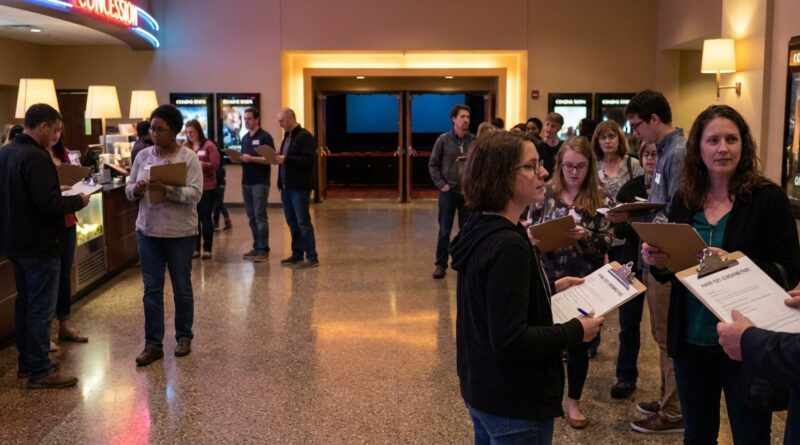
Tonight’s Hybrid Hack: Turn Local Test Screenings Into Your Own Ongoing Beta Movie Club
You know the annoying pattern. A friend posts a selfie from a free advance screening at AMC Burbank, you check the comments, and everyone acts like there is some secret club you missed. Then you spend 20 minutes searching how to find free movie test screenings near me, only to land on dead Facebook pages, expired RSVP links, and Reddit threads from three months ago. The good news is there usually is no secret handshake. The people who keep getting in just use a system. They are on the right email lists, they check a few local sources at the right time, and they treat one screening like the start of a routine, not a random score. If you want to build your own ongoing beta movie club, you can. You just need a repeatable way to catch invites early, reply fast, and connect studio test screenings with festivals, cinema clubs, and preview programs already happening in your area.
⚡ In a Hurry? Key Takeaways
- Free movie test screenings are usually found through research firms, local promo pages, theater-area email lists, and festival calendars, not one magic app.
- Start a simple weekly routine: sign up for screening lists, save nearby theaters, check posts twice a day, and answer invites fast.
- Never pay for a “guaranteed” seat from strangers. Real test screenings are usually free, and overbooking is common, so arrive early.
Stop hunting for one perfect source
The biggest mistake people make is looking for a single website that lists every free screening near them. That is not how this world works.
Test screenings are scattered on purpose. Some come from audience research companies. Some come from local marketing teams. Some pop up through film festivals, cinema clubs, college film departments, and nonprofit arts groups. That is why people who seem lucky are often just organized.
Your goal is not to find one gold mine. Your goal is to build a small mix of sources that, together, keep feeding you opportunities.
Your hybrid hack, build a beta movie club system
Think of this like setting up a home coffee station. Once everything is in the right place, the daily effort is tiny.
Step 1: Pick your screening zone
Choose a realistic driving area. Maybe that is AMC Burbank, Americana at Brand, one Regal, one indie theater, and a couple of festival venues. If you tell yourself you will chase every screening in the whole region, you will burn out fast.
Make a short list of five to eight venues you can actually reach on a weeknight.
Step 2: Join the right lists
This is where most wins start. Look for audience screening signups, theater newsletters, local arts newsletters, film society mailing lists, and festival alerts. Use a separate email address if you want to keep things tidy.
Good screening emails often come with very little warning. Sometimes same day. Sometimes 24 to 72 hours out. If the message lands in a cluttered inbox, you will miss it.
Step 3: Create a two-minute check routine
Morning and late afternoon. That is enough for most people.
Check your screening email. Check the social feeds or event pages for your chosen venues. Check local film groups and neighborhood event boards. If you are serious, set keyword alerts for phrases like “advance screening,” “test screening,” “preview screening,” and “RSVP required.”
Step 4: Treat every RSVP like a soft yes, not a guaranteed ticket
This part matters. Many free screenings overbook on purpose because they know some people will not show up. So if you get a pass, great. Then plan to arrive early anyway.
Free seat does not mean reserved seat.
Where free test screenings usually show up first
Audience research firms
These are often the real engine behind test screenings. They recruit viewers, collect feedback, and help fill theaters with the kind of audience studios want to hear from. Search for local screening panels and audience research signups in your area. If a company runs legit screenings near you, join first and ask questions later.
Be ready to fill out small surveys. Age range, movie habits, ZIP code, household info. That is normal. They are trying to match a target audience.
Regional promo accounts and event pages
Many free passes spread through local promo pages before they hit wider movie circles. That is why broad national searching can fail you. The useful post may be on a city-specific page, not a major entertainment site.
Look for accounts focused on your metro area, not just “movies.”
Theaters and nearby lifestyle venues
Chains are obvious, but nearby shopping centers and entertainment districts can matter too. A screening at or near Americana at Brand, for example, may get promoted through local event calendars or partner accounts instead of the theater itself.
Festivals, film clubs, and cinema nonprofits
This is the hybrid part people miss. Even when studio test screenings are quiet for a few weeks, local film programming is often not. Festivals need engaged audiences. Cinema clubs need turnout. Special preview series need regulars who will actually show up.
If you like being “first critic in the room,” these events scratch the same itch and keep your routine alive between studio invites.
Turn one good invite into many more
Once you get into one screening, do not just enjoy the movie and go home. Use that night to widen the loop.
Ask what list this came from
If the line is friendly, ask another attendee where they heard about it. Not in a weird way. Just casually. Movie people usually love sharing the source once they trust you are actually interested.
Watch the paperwork
Sometimes the pass, waiver, or follow-up survey tells you which company or promo partner organized the event. That clue can lead you to a signup page you would not have found otherwise.
Follow the venue, then the partner, then the festival
One event often points to another. The theater account follows a local film org. The film org promotes a festival. The festival partners with a club. Suddenly you have a whole map.
This is also why it helps to read pieces like How To Turn Mystery Movie Nights Into Your Personal Test-Screening Hack. Mystery screenings, preview programs, and test screenings often share the same local habits and audience networks.
Build a simple tracking setup, not a spreadsheet from 1998
You do not need a giant database. You need something you will actually use.
Use one note with four sections
Sources: Mailing lists, promo accounts, clubs, festivals.
Venues: Your top theaters and event spaces.
Keywords: Advance screening, free screening, RSVP, preview, audience research.
Wins: Which source actually got you in.
After a month, patterns start to show up. Maybe Tuesdays are active. Maybe one venue tends to post same-day invites. Maybe one festival newsletter is far better than five noisy social feeds.
Set phone alerts sparingly
Do not turn your phone into a slot machine. Pick only your best sources for notifications. If everything pings, nothing feels important.
How to answer invites so you actually get seats
Fast matters. But careful matters too.
Use a clean RSVP profile
Keep your name, ZIP code, and preferred contact info consistent. If forms look messy or incomplete, you may miss confirmation messages or duplicate yourself by accident.
Read the fine print
Some screenings forbid phones. Some need printed passes. Some accept one guest, some do not. Some are clearly marked as first come, first seated.
That tiny line of text is often the difference between a great free night and a long, frustrating line that goes nowhere.
Arrive early and act normal
That sounds obvious, but it matters. Staff remember the people who follow directions and keep things easy. If the same local teams are filling rooms again and again, being reliable helps.
Red flags to avoid
If someone wants money for a “free” screening pass, walk away.
If a site asks for excessive payment details before showing any event information, be cautious.
If the source looks sketchy, check whether the venue, partner, or organizer exists outside that one post.
Legit test screenings can be a little messy and last-minute. That is normal. Shady is different. Trust your gut.
How to keep the club going all year
The trick is not constant volume. It is consistency.
Rotate between three lanes
Lane 1: Studio and audience research test screenings.
Lane 2: Mystery movie nights and preview programs.
Lane 3: Festivals, clubs, and special local film events.
If one lane is quiet, the others keep your habit alive.
Bring one dependable friend
A good plus-one helps. They show up on time, follow rules, and like talking movies after. Now you do not just have a screening hobby. You have a tiny beta movie club.
That social part matters more than people think. It gives the whole system momentum.
At a Glance: Comparison
| Feature/Aspect | Details | Verdict |
|---|---|---|
| Best way to find invites | Use a mix of audience research lists, local promo pages, theater alerts, and festival calendars. | Much better than relying on random social posts. |
| Time needed each week | About 10 to 15 minutes a day for quick checks and fast RSVPs. | Low effort once your system is set up. |
| Chance of getting in | Higher if you reply quickly, choose nearby venues, and arrive early because free screenings often overbook. | Good odds, but never treat RSVP as a locked seat. |
Conclusion
You do not need Hollywood contacts to make this work. You need a routine. Right now research firms are quietly filling audiences for free test screenings at chains like AMC Burbank and Americana at Brand, while indie festivals and cinema clubs are lining up April and May programs that need responsive, film-literate crowds. If you spot posts early, get onto the right email lists, and cross-check them with festival calendars, you stop chasing scraps and start building a real habit. That means more actual seats in actual rooms, and a lot less generic advice about following theaters on social. For Previewers Network readers, that is the win. You turn today’s scattered, last-minute invites into an ongoing system, and you become the person who is already in line when everyone else is still asking where these screenings even come from.