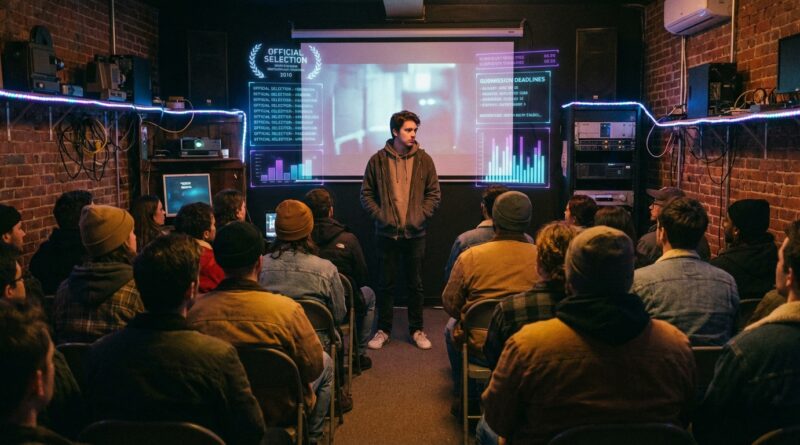
Tonight’s Festival Fast‑Track: Turn ‘Submit Your Film’ Deadlines Into Your Own Early‑Access Screening Tour
You know the feeling. Your short is finished, exported, backed up twice, and still somehow stuck. Every festival page asks for another fee, another poster size, another synopsis word count. Then the waiting starts. Meanwhile, other filmmakers are posting photos from packed rooms and Q and A sessions while your film is still sitting on a hard drive. That is why early access film festival submissions 2026 matter more than they used to. A growing batch of 2026 calls are not just contests. They are early screening lanes. If you treat them like a preview tour instead of a one-shot gamble, the whole process gets easier to justify. You are not only chasing laurels. You are getting your film in front of real people, collecting reactions, spotting weak spots, and even opening distribution conversations before the wider industry catches up. That shift in mindset can save money, time, and a lot of second-guessing.
⚡ In a Hurry? Key Takeaways
- Some 2026 festival submissions now work best as early-access preview screenings, not just awards entries.
- Start with events and platforms that promise audience feedback, live screenings, or distribution contact, then build your submission calendar around those first.
- Always check premiere rules and rights terms so your early screening helps your film instead of blocking bigger opportunities later.
Stop thinking “festival lottery,” start thinking “test screening tour”
The old way of submitting treated every festival as a yes-or-no gate. Pay the fee. Fill in the form. Wait months. Hope for a laurel.
That still happens, of course. But a lot of newer and quietly smart opportunities in the 2026 cycle do something more useful. They put your film in a room. They let you see what lands. They help you learn before you burn through your whole budget on bigger, slower festivals.
For an indie filmmaker, that can be a much better use of time and money. If a room goes flat during the middle act, that is useful. If the ending gets a real reaction, that is useful too. If people stay after for questions, even better. You are getting proof, not just hope.
Why early access film festival submissions 2026 are worth your attention
The phrase sounds a bit corporate, but the idea is simple. You submit early to places that can show your film to real audiences while the wider festival season is still open. That gives you a head start.
What you get out of it
First, audience feedback. Not vague online comments. Real in-room reactions. You can often tell more from one screening than from fifty polite messages from friends.
Second, validation. If strangers laugh where you wanted them to laugh, or go quiet at the right moment, that tells you the film is doing its job.
Third, positioning. If you can say your short has already screened successfully and gathered audience response, you are no longer pitching a mystery object. You are showing momentum.
What changed recently
More festivals and screening networks are acting like early market testers. Some are tied to unusual venues. Some focus on networking and feedback. Others are built to connect screening activity with possible distribution paths.
That is especially helpful for Previewers Network members, because the value is not just the screening itself. It is the chance to get in front of the curve. Mainstream reviewers may not even know your film exists yet. You are already learning what works.
Three kinds of opportunities that matter right now
1. Venue-led live screenings
If a festival offers an actual audience in a memorable venue, pay attention. A screening in a place like Roswell’s UFO museum is not just quirky marketing. It is a real-world attention test. If your film plays there, you are getting audience energy, event photos, and a story around the screening itself.
That matters because people remember context. A short that screens in a distinct venue can get more chatter than one quietly uploaded into a standard online queue.
2. Validation-focused screening networks
Networks such as Live Screenings can be useful when your goal is proof of audience response. You are not only trying to “win.” You are trying to see whether your edit, pacing, sound mix, and ending survive contact with actual viewers.
This is where many filmmakers save themselves from a common mistake. They submit too broadly before they know how the film plays. Then they spend money sending a version that still needed one more pass.
3. Distribution-first portals
Platforms like TAPP Film are worth a look if they are built with exposure and downstream opportunities in mind. Not every short will land a deal. That is fine. The point is that these portals can do more than hand out laurels. They can help you start building a distribution story early.
For a short filmmaker, that can mean you are not waiting until the end of your festival run to ask, “So what now?” You are asking it at the start, which is much smarter.
How to build your own early-access screening plan
You do not need a giant spreadsheet with color coding. Well, you can have one if that makes you happy. But the basic process is simpler than it looks.
Step 1. Sort opportunities by outcome, not prestige
Make three lists.
One list for feedback. One for audience visibility. One for distribution potential.
That helps you avoid wasting money on festivals that sound impressive but do not actually move your film forward in a practical way.
Step 2. Read the premiere rules carefully
This part is boring. It is also important.
Some festivals care deeply about premiere status. Others do not care at all. If your dream target later in the year requires a premiere, an early public screening could shut that door. So before you hit submit, check whether your “preview run” fits the rest of your plan.
Step 3. Ask what feedback really looks like
Not all audience feedback is equal. A useful screening setup might include a Q and A, audience voting, organizer notes, or post-screening comments. A less useful one may just mean your film played somewhere and you never hear a thing.
If the event promises insight, ask how that insight is delivered.
Step 4. Keep assets ready
Most delays happen because the film is done but the package is not. Have these ready before the deadlines rush in:
- Final export in the requested formats
- Synopsis in short and long versions
- Director bio
- Still images
- Poster art
- Subtitle file, if available
- Screening history
That way, when a useful 2026 call opens, you are not scrambling at 11:47 p.m.
What real-time Q and A feedback can tell you that online comments cannot
This is where live events still beat almost everything else.
When people ask questions in person, they reveal what they understood, what confused them, and what stayed with them. If five people ask about the same story beat, that is not random. If nobody asks about the part you thought was the emotional center, that tells you something too.
You also get timing data without needing fancy analytics. Did the room laugh late because the joke took a second to land? Did attention drift? Did the ending create silence in a good way or a bad way?
That sort of room-read is gold for filmmakers. It is the kind of thing studios pay for during test screenings. Indie creators can now get a lighter version of it through smart festival choices.
Watch for the hidden costs too
Not every “opportunity” is a good one. Some are basically expensive inboxes with nice branding.
Red flags to notice
If a platform is vague about whether films are actually screened, be careful.
If feedback is promised but never explained, be careful.
If rights language is broad or confusing, stop and read it again.
If every category has a fee and none of the benefits are concrete, your money may be better spent elsewhere.
The best early-access film festival submissions 2026 options should answer three simple questions. Will people really see the film? Will you learn something useful? Will this help the next step?
How Previewers Network members can get extra value
This approach works especially well for Previewers Network members because the upside is front-loaded. You do not need to wait for a giant review, a major award, or an industry co-sign before getting something back.
You can get audience reaction early. You can collect event photos and social proof early. You can start shaping your pitch based on what viewers actually respond to, early.
That makes your later festival entries stronger. It also makes your conversations with collaborators, press contacts, or possible distributors a lot more grounded. Instead of saying, “I think audiences will connect with this,” you can say, “We screened it, and here is what happened in the room.”
A simple budget rule that keeps this sane
Try the 60-30-10 split.
Put 60 percent of your submission budget toward practical screening and feedback opportunities. Put 30 percent toward reach or prestige targets. Save 10 percent for late surprises, fee waivers, or a must-enter event you discover later.
It is not a law. It is just a good way to stop spending everything on long-shot entries before your film has had a chance to prove itself.
At a Glance: Comparison
| Feature/Aspect | Details | Verdict |
|---|---|---|
| Live audience screening | Shows how the film plays in real time and can lead to Q and A insight, photos, and social proof. | Best first step if you need honest feedback fast. |
| Validation-focused network | Useful for confirming whether the film connects with viewers before larger submissions. | Great for refining your strategy and your cut. |
| Distribution-first portal | Can help you start exposure and distribution conversations while festival windows are still open. | Most useful when paired with clear rights terms and realistic expectations. |
Conclusion
The smartest move right now is to stop seeing every submission as a shot in the dark. There is a real surge of 2026 festival calls that quietly double as early test markets. That includes live audience screenings in places as memorable as Roswell’s UFO museum, validation-focused networks like Live Screenings, and distribution-first portals such as TAPP Film. If you treat them as structured preview runs instead of pure contests, you give your short a better start. Previewers Network members can get useful perks long before mainstream reviewers ever see the film. Real-time Q and A feedback. Clearer data on what works in the room. Even a head start on distribution positioning while submission windows are still wide open. In other words, your finished short does not have to sit there waiting for permission. It can start meeting its audience tonight.